.png )
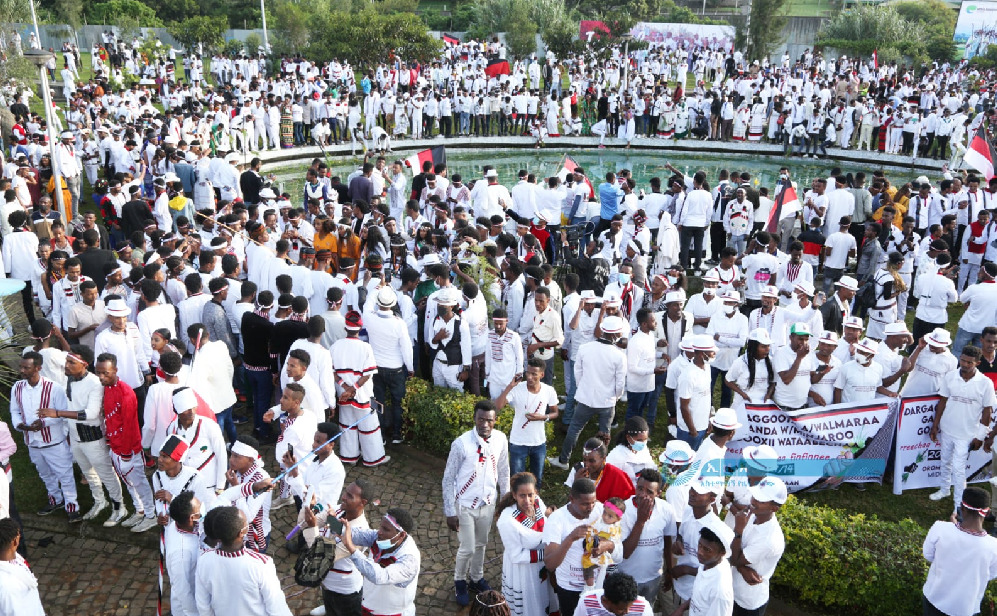
Irreecha: A Colorful Celebration of Oromo Traditions
- 27 Oct, 25
- Yonatan

The Lavradeira costume is one of the most iconic and richly symbolic traditional outfits of Portugal, especially associated with the Minho region in the north. Worn historically by peasant women (lavradeiras), this costume is a vibrant celebration of Portuguese rural culture, craftsmanship, and regional pride.
Description of the Lavradeira Costume:
The Lavradeira costume is known for its **colorful, layered, and finely embroidered garments**, traditionally worn during festivals, pilgrimages (romarias), and folk dances. Though there are variations depending on the village or town, a typical Lavradeira outfit includes the following elements:
Bodice and Blouse:
The blouse is usually white, made from linen or cotton, and adorned with **intricate hand embroidery**, especially on the sleeves and collar. Over the blouse, a fitted bodice is worn, often made from velvet or wool and decorated with ribbon, lace, or more embroidery.
Skirt (Saia) and Apron (Avental):
The skirt is the most eye-catching part of the costume — typically made from thick wool in bold colors like red, blue, green, or black. It's pleated and heavily embroidered with traditional motifs such as flowers, hearts, or geometric shapes.
A contrasting apron is worn on top, also embroidered and often edged with lace or braid, creating a beautiful layering effect.
Jewelry:
A Lavradeira's look wouldn't be complete without gold filigree jewelry, especially the iconic “heart of Viana” (Coração de Viana). Multiple gold necklaces, earrings, and brooches are proudly worn — a symbol of family wealth, devotion, and heritage.
Accessories:
*Headscarves (lenços) – Brightly colored and worn either on the head or around the neck, often embroidered to match the skirt.
*Hand-knitted socks and leather shoes or clogs complete the ensemble.
Cultural Significance:
More than just clothing, the Lavradeira costume tells a story of **identity, craftsmanship, and community pride**. Each outfit is handmade, often passed down through generations, and worn with pride during festivals such as the **Romaria da Senhora d’Agonia** in Viana do Castelo — one of Portugal's most spectacular celebrations of tradition and faith.
You need to Login OR Register for comment.


Comments (0)