.png )
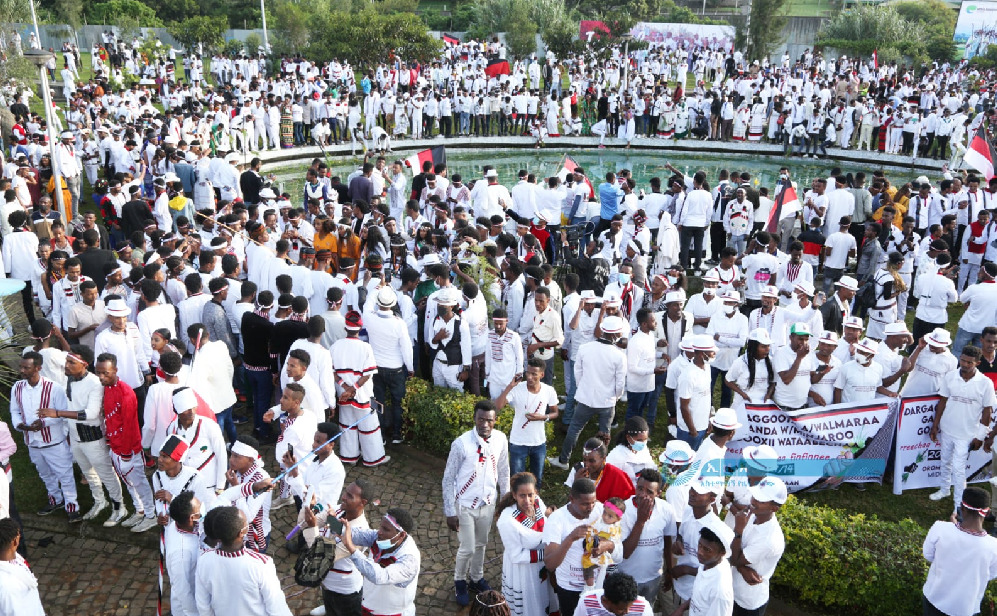
Irreecha: A Colorful Celebration of Oromo Traditions
- 27 Oct, 25
- Yonatan

The hanbok, known in North Korea as 조선옷 (Joseon-ot), is the traditional Korean national attire, worn by both men and women and regarded as an important symbol of cultural identity and pride. While the hanbok is shared by both North and South Korea, the North Korean version of the hanbok has developed its own stylistic distinctions, often marked by more conservative cuts and simplified designs that reflect the country’s political ideology and values. Women's hanbok typically consists of a long, high-waisted skirt (chima) and a short jacket (jeogori) tied with a ribbon, while men wear loose trousers (baji) and a longer jacket. In North Korea, the hanbok is often seen in solid colors with less elaborate embroidery compared to its South Korean counterpart, emphasizing modesty and unity over individualism and luxury.
The Joseon-ot is worn on important national holidays, traditional festivals, weddings, and other ceremonial occasions, including performances and school events. In everyday life, it is less commonly worn, except by older generations and during formal events. The North Korean government promotes the hanbok as a representation of pure Korean tradition, free from Western influence, and as a visual expression of loyalty to national values. Schoolgirls and performers often wear brightly colored hanbok-like uniforms, and women may wear hanbok variations during patriotic celebrations. While rooted in ancient Korean tradition, the hanbok in North Korea has become a tool of cultural preservation as well as political symbolism, blending heritage with the state’s emphasis on discipline, nationalism, and social harmony.
You need to Login OR Register for comment.


Comments (0)