.png )
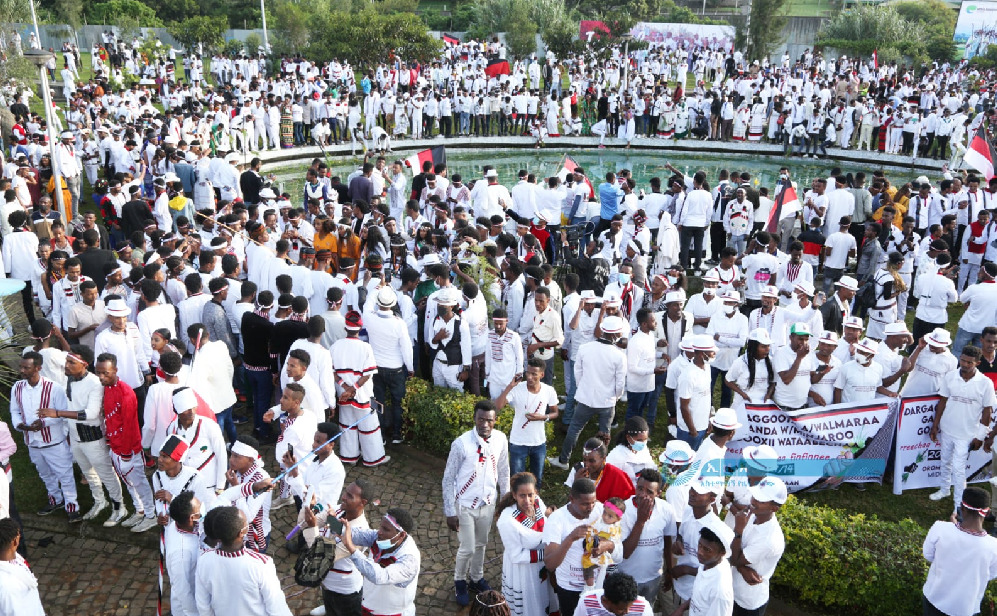
Irreecha: A Colorful Celebration of Oromo Traditions
- 27 Oct, 25
- Yonatan

Faso Dan Fani is the most iconic traditional fabric and clothing of **Burkina Faso**, deeply woven into the country's cultural identity and pride. The name means woven cloth of the homeland in the Dioula language, and it represents not just fashion, but heritage, resilience, and national unity.
Fabric & Craftsmanship
Faso Dan Fani is a handwoven cotton fabric traditionally made on narrow strip looms by skilled artisans, often in rural communities. The fabric is created by weaving thin strips, usually about 10–15 cm wide, which are then sewn together to form a larger cloth. This time-honored process is passed down through generations and reflects a strong tradition of craftsmanship, patience, and attention to detail.
The cloth features **bold geometric patterns and earthy tones**—typically indigo, white, black, and sometimes red or green. Each color and motif can carry symbolic meaning, representing values like peace, strength, fertility, or connection to the land.
Cultural & Political Symbol
Faso Dan Fani became a national symbol during the presidency of **Thomas Sankara** (1983–1987), who promoted it as part of a broader campaign for economic independence and cultural pride. He encouraged citizens to wear Faso Dan Fani instead of imported clothes, making it a symbol of **Burkinabé identity, dignity, and anti-colonial resistance**.
Modern Use
Today, Faso Dan Fani is worn during traditional ceremonies, weddings, official events, and is also used by designers in modern fashion. It is tailored into dresses, shirts, suits, and accessories, blending tradition with contemporary style. Despite modern influences, the fabric continues to be a proud marker of national identity and craftsmanship in Burkina Faso.
You need to Login OR Register for comment.


Comments (0)